

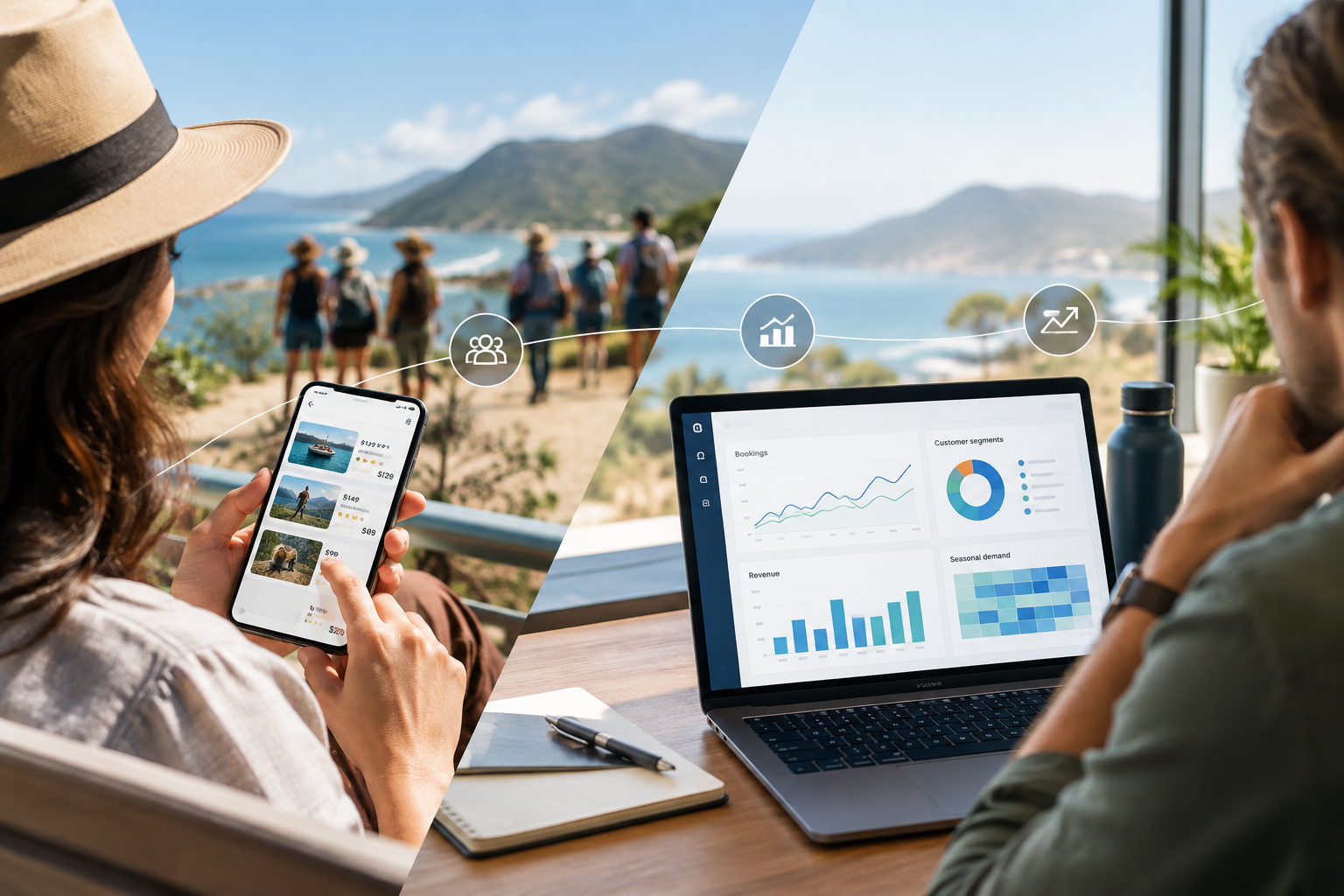
There is a question many tourism operators are quietly asking right now: are rising costs changing the way people travel? The simple assumption is that when household budgets become tighter, people stop spending on experiences. But tourism rarely works that way. People still want to explore new places, spend time with family and friends, celebrate milestones and create memories. Experiences remain an important part of how people spend their time and money. What changes is the decision-making process. Guests become more selective, they research more carefully, and they want greater confidence that the experience they choose will genuinely be worth the investment.
For tour operators, this creates a different kind of challenge. The opportunity is not simply about convincing people to travel. It is about understanding what customers value, how their behaviour is changing and whether your business is adapting quickly enough. In a more cautious spending environment, the operators who understand their customers best will be better positioned to make the right decisions around pricing, marketing, products and capacity.
Customers are still buying experiences, but they need more confidence
When a guest books a tour, they are not simply buying a few hours of activity. They are buying an expectation of a great memory. They are trusting your business to deliver something worthwhile with their limited free time and discretionary spending.
When budgets are under pressure, that decision becomes more considered. Guests may spend longer reading reviews, comparing operators, looking at photos, checking inclusions and asking more questions before they commit. They want to understand what makes your experience different and why it is worth choosing over another option.
This means communicating value has become more important than ever. A product page that simply lists the itinerary, duration and inclusions may not be enough. Customers want to understand the story behind the experience. They want to know who it is perfect for, what makes it memorable and why previous guests loved it. The best operators are not just selling a tour; they are helping customers feel confident that they are making the right choice.
The challenge is knowing what is actually changing
One of the hardest parts of managing a tourism business is separating what you think is happening from what is actually happening. You may notice that bookings feel different. Perhaps customers are taking longer to decide, enquiries have changed, certain products are performing differently, or your seasonal patterns are shifting.
But without looking at the data, it is difficult to know why.
Are customers booking closer to departure than they used to? Are locals becoming a larger part of your customer base? Are some products continuing to grow while others are slowing down? Are certain marketing channels attracting better customers than others? Are repeat guests becoming more valuable as new customer acquisition becomes harder?
These questions matter because they influence the decisions you make every day. If customers are booking later, your marketing timing may need to change. If certain experiences are proving more resilient, you may want to focus more resources there. If repeat customers are becoming increasingly important, your retention strategy deserves more attention.
The challenge is that many operators already have this information. It is sitting inside their booking systems, accounting software, marketing platforms and spreadsheets. The issue is not a lack of data. The issue is turning that data into something useful.
Your booking data is telling you what your customers value
Every booking creates a piece of the bigger picture. It tells you who your customers are, what they purchased, when they booked, where they came from and how much they spent. When you start looking at those patterns over time, your data begins to tell a story about your business.
The problem is that many operators still spend too much time collecting information instead of using it. Pulling reports manually, comparing spreadsheets and trying to combine information from different systems takes valuable time away from running the business.
By the time the analysis is complete, the opportunity may have already changed.
In a shifting market, speed matters. The operators who can quickly understand what is happening and respond accordingly will have a significant advantage.
Better decisions start with better visibility
When conditions become more challenging, relying on assumptions becomes expensive. Successful operators need to understand which products are driving revenue, which customers are most valuable, which channels are working and where opportunities exist.
This does not mean becoming a data analyst or spending hours building complicated reports. It means having access to the information you need, when you need it.
Having clear visibility over your business allows you to make decisions based on what your customers are actually doing rather than what you think they are doing.
How Dazhboards helps operators understand changing demand
Dazhboards helps tourism operators bring their business data together so they can better understand sales trends, customer behaviour, product performance and revenue patterns without spending hours manually extracting information from multiple systems.
Instead of searching through different platforms to answer simple business questions, operators can quickly see what is working, what is changing and where they should focus their attention.
Because the goal is not simply having more data.
The goal is understanding what that data is telling you and using it to make better decisions.
The question every operator should ask
Customer behaviour will continue to change. Economic conditions will continue to shift. Travel patterns will continue to evolve.
The question is not:
“Will people continue travelling?”
The better question is:
“Do I understand how my customers are travelling differently?”
Your booking data already contains the answer. You just need a clearer way to see it.
👉 Explore Dazhboards and turn your tourism data into insights that help you understand your customers and make better decisions in a changing market.