

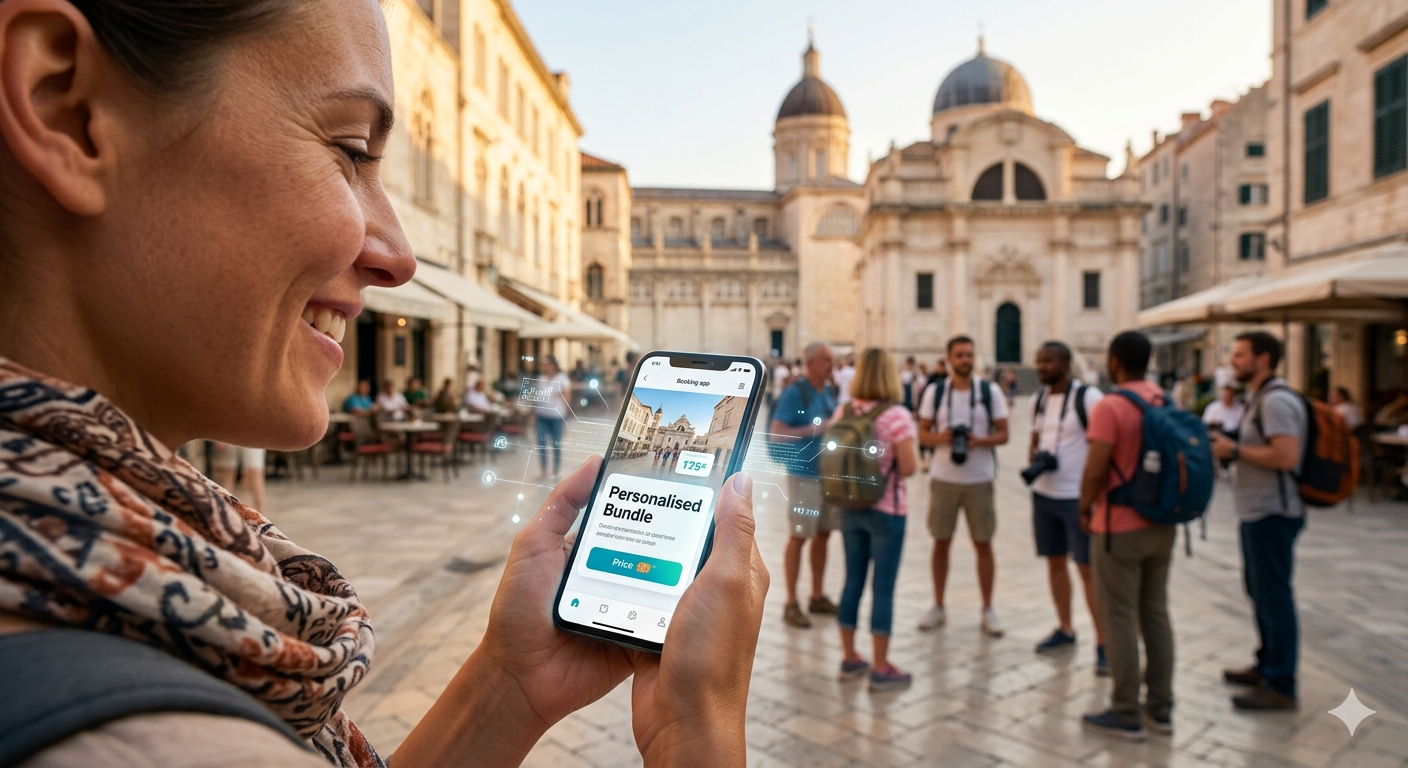
Travel demand has become more volatile and more data‑driven than ever, and static price lists simply cannot keep up. Tour and activity operators that once updated prices a few times a year are now competing with airlines, hotels, and online travel agencies that adjust prices dozens or even hundreds of times per day using artificial intelligence (AI). AI‑powered dynamic pricing gives tour operators a way to respond to real‑time demand, protect margins, and deliver fair, transparent pricing that feels aligned with customer expectations.
This article explores how AI can optimise pricing for tours and experiences, and how dynamic pricing influences profitability, customer satisfaction, and long‑term growth.
How AI Optimises Pricing for Tour Operators
1. Real‑Time, Multi‑Source Data Analysis
AI pricing engines excel at processing large volumes of data from many sources simultaneously. For tour operators, that typically includes:
- Live booking pace and remaining capacity for each departure
- Historical booking patterns and seasonality
- Lead times and cancellation trends
- Competitor price levels and promotions
- External signals like weather, local events, and public holidays
Instead of relying on a static “high, shoulder, low season” table, AI systems continuously analyse this data and recommend (or automatically apply) small price adjustments in real time. For example, if bookings for a sunset cruise suddenly spike because a festival is announced, prices can rise gradually for remaining seats while staying within pre‑defined minimum and maximum limits.
2. Predictive Analytics and Demand Forecasting
One of AI’s biggest advantages is the ability to forecast demand before it materialises. Models trained on historical data, seasonality, and market signals can predict:
How many seats are likely to sell at different price points
Which dates and time slots are likely to be most popular
When booking, momentum is ahead of or behind typical patterns
With this foresight, tour operators can raise prices earlier for departures that are tracking ahead of plan, rather than realising too late that a departure has sold out at an underpriced rate. Likewise, they can lower prices earlier for slow‑moving days, giving discounts more time to work and avoiding last‑minute fire sales that hurt margins.
3. Personalised and Segment‑Based Pricing
AI also enables more nuanced pricing than a single public rate for everyone. While fully individualised prices can raise fairness questions, many operators use segment‑based approaches that feel both effective and acceptable, such as:
Loyalty or “repeat guest” offers
Early‑bird discounts for advance planners
Targeted promotions for locals or off‑peak travellers
Different offers by channel (direct vs marketplace)
By analysing customer behaviour, trip types, and booking history, AI can identify which segments are more price‑sensitive and which value convenience or premium experiences more. The system can then adjust discounts, value adds, or bundle recommendations accordingly, helping to increase conversion without simply cutting prices across the board.
4. Competitive Pricing Intelligence Without a Race to the Bottom
Keeping track of competitor pricing manually is almost impossible in a market where rates can change multiple times per day. AI tools can monitor competitor prices on marketplaces and direct sites, aggregate the information, and highlight where a tour is overpriced or underpriced relative to similar experiences.
Crucially, this does not mean always being the cheapest. Instead, operators can define rules like “stay within a certain range of the median market price” or “maintain a premium of a certain percentage for small‑group departures.” AI then suggests or applies price changes that preserve positioning and profitability while keeping offers attractive in search results and comparison views.
5. Dynamic Bundle and Add‑On Pricing
AI also supports more sophisticated pricing for bundles and extras, not just base tour prices. By analysing which products are commonly purchased together and how different customer segments behave, AI can:
Create bundles that combine tours, transfers, and activities at attractive package prices
Vary the bundle discount based on demand and inventory
Optimise prices for optional extras such as equipment hire, food upgrades, or private guides
This dynamic bundling approach increases average booking value and encourages customers to book more of their trip with a single operator, improving both revenue and convenience.
Impact on Profitability and Customer Satisfaction
Maximising Revenue and Capacity Utilisation
Industry analyses in adjacent sectors, such as hotels, consistently show that AI-based dynamic pricing can deliver double‑digit improvements in revenue per available unit and higher occupancy. Similar principles apply to tours and experiences:
Prices start lower when capacity is wide open, stimulating demand.
As seats fill up, the system gradually increases prices for remaining spots.
Peak dates and times, identified early, carry higher rates in line with demand.
This occupancy‑based pricing helps operators capture higher willingness‑to‑pay on busy departures while still attracting price‑sensitive guests on slower days. The result is more balanced loads across departures and better overall utilisation of staff, vehicles, and fixed costs.
Improving Customer Perception and Fairness
Dynamic pricing is often misunderstood as “random price changes,” but when implemented transparently, it can actually support a sense of fairness. Customers increasingly understand that prices vary with demand, booking time, and availability, especially in travel, where flights and hotels have used such models for years.
Clear communication, such as noting that “prices may vary by date and demand” and showing that booking early secures a better rate, helps set expectations. Combined with segment‑based offers that reward loyalty or early commitment, dynamic pricing can feel like a benefit rather than a penalty.
Staying Competitive in a Changing Distribution Landscape
Discovery and booking are steadily shifting to AI‑enhanced channels, from metasearch and booking sites that use AI for “smart search” to conversational assistants helping travellers plan and book trips. Many of these channels favour products that:
Have structured, machine‑readable content
Offer transparent, competitive, and dynamically updated prices
Integrate cleanly via APIs and modern booking engines
Tour operators that adopt AI‑driven pricing as part of a broader digital strategy are more likely to stay visible and relevant as these AI‑powered distribution channels grow.
Reducing Manual Effort and Pricing Errors
Without AI, updating prices across seasons, channels, and promotions can consume countless hours and still leave gaps and inconsistencies. AI‑driven pricing automates much of this work:
Pulling data from booking systems and external sources
Applying rules and optimisation models
Pushing updated rates back through APIs to websites, marketplaces, and partners
Commercial teams can then focus on strategy, deciding guardrails, shaping products, and reviewing exceptions, rather than manually editing spreadsheets and rate tables.
Driving Long‑Term, Data‑Informed Growth
Perhaps the most overlooked benefit of AI pricing is the insight it provides. Every price change and booking outcome becomes part of a feedback loop that reveals:
Which products and time slots are consistently underpriced or overpriced
How different segments respond to price changes
Which campaigns or channels bring the most profitable demand
These insights directly inform wider decisions on product development, staffing, marketing spend, and market expansion, supporting more sustainable, evidence‑based growth.
Practical Examples
To make this concrete, here are three anonymised scenarios that reflect how operators are using AI pricing today:
Example 1: Capturing Peak‑Season Demand
A coastal experience operator used to charge a single fixed rate for all summer departures, often selling out the most popular dates weeks in advance. After implementing AI‑assisted pricing, they:
Introduced occupancy‑based curves that raised prices as specific departures filled
Flagged “red‑hot” dates early using demand forecasts
Offered modest early‑bird discounts for less popular time slots
Over the following high season, revenue per departure increased, with the strongest uplift on the busiest days, while overall guest satisfaction scores remained stable.
Example 2: Filling Off‑Peak Departures Without Heavy Discounting
A budget‑focused operator running city tours faced low load factors on weekday mornings outside holiday periods. Instead of blanket discounts, they used AI to:
Identify specific days and times with persistently weak demand
Create targeted offers for locals and last‑minute bookers
Keep standard pricing in place for weekends and holidays
The result was a noticeable uplift in mid‑week occupancy and total revenue, without eroding peak‑period prices or training customers to expect constant discounts.
Example 3: Rewarding Loyalty and Increasing Basket Size
A mid‑sized operator with a strong repeat guest base began feeding CRM data into its pricing logic. AI models highlighted high‑value segments and recommended:
Exclusive loyalty offers on higher‑margin small‑group products
Personalised bundle suggestions that combined signature tours with add‑ons
Early access pricing for new experiences
Average spend per repeat guest increased and the share of bookings coming through direct channels grew, reducing reliance on commission‑heavy intermediaries.
Key Considerations Before You Switch on AI Pricing
While the benefits are compelling, switching to AI‑driven pricing should be deliberate and structured.
Data quality and integration: AI models are only as good as the data they receive, so ensure booking, channel, and CRM systems can reliably share data and accept price updates via APIs.
Guardrails and ethics: Define clear minimum and maximum rates, acceptable discount levels, and segmentation rules to avoid pricing outcomes that feel arbitrary or discriminatory.
Test and learn: Start with one product line or market, run AI pricing in parallel with your current approach for at least a season, and measure revenue, load, and customer feedback before rolling out more broadly.
Conclusion
AI‑powered dynamic pricing has moved from a niche experiment to a practical, proven tool for tour and activity operators who want to stay competitive in a fast‑changing market. By analysing real‑time demand, forecasting future bookings, tailoring offers to meaningful customer segments, and automating complex decisions, AI helps operators maximise revenue while still offering fair and transparent prices.
For operators willing to invest in data foundations, guardrails, and a “human‑in‑the‑loop” approach, dynamic pricing is becoming one of the most effective levers for sustainable growth in 2026 and beyond.